


What is User Experience (UX) and its Effect on SEO?
With the current trends in digital marketing, developing a website is not just about making sure your website looks good or ranks highly in search engines. Companies need to pay attention to providing a great user experience (UX) to their audience while at the same time satisfying the needs of search engines. As the algorithms of search engines become increasingly complex, the connection between UX and SEO has never been stronger.
From eCommerce businesses to corporations, whether you provide UI UX web design services or not, you need to know how UX affects search engine rankings.
User Experience (UX) Overview
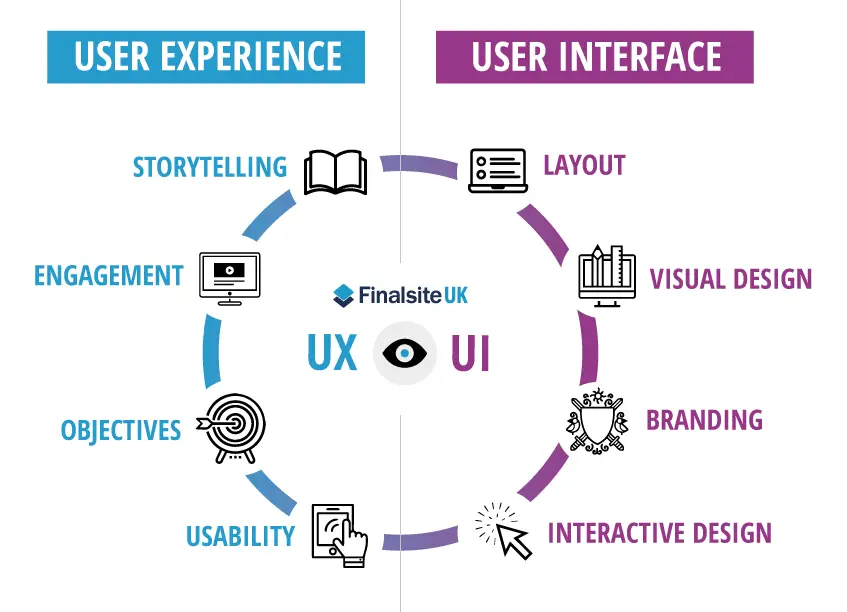
User Experience (UX) is defined as the experience gained by visitors when using a website. It includes all from the ease of website navigation and speed to readability of the content and responsive design of the site.
When interacting with a website, users subconsciously evaluate different elements of the website:
- Is the website easy to navigate?
- Are they able to find the required information?
- Does the website load quickly?
- Is the website professionally designed?
- Can they do what they intended to do?
Positive answers to these questions create good user experience, while bad user experience forces them to abandon the website and look for another option.
For businesses that provide professional UI/UX design services, custom web design services , and website development, the creation of such user experiences is a valuable asset.
Connection BetweenUX and SEO
There was a time when SEO and UX were considered two separate fields. The former would focus on keywords, backlinks, and technical optimization, while the latter would focus on usability and design.
However, there is now an interconnection between these two aspects.
Search engines such as Google try to give their users the best possible result. User signals which show positive engagement are regarded as signs of quality and relevance by search engines.
Some user signals which affect SEO include the following:
- Time spent on the website
- Bounce Rate
- Number of pages visited
- CTR
- Conversion rates
- Mobile usability
If you can give your users something worth spending time on and make them happy while they navigate your website, then search engines will recognize the quality signals and might improve the ranking of your website.
This is why companies which invest in UI UX design services for SEO, website redesign services for SEO, and custom web development companies do better in terms of organic visibility.
The Best Ways to Enhance UX to Improve SEO
1.Decrease the Time for Loading the Web Page
In today’s times, users expect websites to load within seconds. Research clearly shows that users leave sites that load slowly, especially on mobile phones.
Fast loading websites have many advantages, such as:
- Less bounce rate
- High engagement from users
- Higher conversions
- High search engine rankings
Those looking for website speed optimization, technical SEO, and high-speed web development can focus on optimizing speed as part of their digital marketing strategies.
There are a number of ways of optimizing website speed, such as:
- Image compression
- Code file minimization
- Browser caching
- Reliable website hosting
- Use of CDNs
Every significant page on a website – be it the service page, landing page, blog page, or product page – must be optimized for speed.
- Publishing Quality Content
Quality content is considered one of the major determinants that ensure good UX and SEO strategy.
Users turn to websites with an intention to solve some problem, find answers to the questions, and make an informed choice. And if the content on your website is informative and understandable for users, they will be more engaged and move to another page of the website.
Features of quality content:
- User intent satisfaction
- Accuracy
- Structure
- Relevant imagery
- Headings and subheadings
- Value
For those searching for business web design services focused on content, content optimization companies, and consulting on digital marketing and UX, it is important to keep in mind the importance of content quality.
Automatically generated low-quality content can drive traffic to a website at least once, but it usually results in bad engagement metrics affecting rankings negatively.
- Provide Responsiveness
The usage of mobile devices is rising significantly on the worldwide scale as a means of accessing the internet. Consequently, mobile usability is necessary both from the perspective of UX design and SEO.
First of all, Google takes into consideration only the mobile version of a website when calculating its ranking.
If the website works badly in the conditions of using smartphones or tablets, the website can be penalized by Google.
The layout and content of responsive websites adapt automatically depending on the screen size.
Advantages of responsive design are:
- Better user experience
- Increased accessibility
- Increased engagement rates
- Better search rankings
- Easy management of the website
Firms looking for responsive web design services, mobile first web design companies, and cross-device UX design should prefer responsive technologies providing the same experience for any devices.
- Develop Usable Design
If your website looks good but it’s not easy for visitors to navigate, there is no need to have a nice-looking website.
Usability design involves making sure that the website is easy to use and simple. The users should understand from the start what to click on and what to do.
Some good usability design practices include:
- Well-developed navigation menus
- Intuitive page structure
- Consistent design
- Easy-to-read font styles
- Calls-to-action
- Simple forms
The trend nowadays is that enterprises hire enterprise UI UX design agencies and website usability consulting companies.
By putting the usability aspect into focus, enterprises can make sure that their websites serve the purposes of the visitors.
Advantages of User Experience
Lower Bounce Rate
If the users get the required information very quickly and find the site enjoyable, then they will not leave the site and go back to their search results.
Bounce rates tend to be low if a site lives up to the user’s expectations.
(CTR) Click-Through Rates Increased
It does not end with a great user experience. If the site titles and description are optimized well, then there will be clicks from search results.
Then, the good user experience keeps the visitor on the website and not returning back to the search engine.
Improved Conversions
Among the greatest benefits of UX is better conversions.
No matter what you want to do:
- Get leads
- Sell items
- Get inquiries
- Make appointments
- Subscribe to newsletters
The more user-friendly your site is, the easier it becomes to get done.
There are lots of firms which specialize in conversion rate optimization, UX-oriented web design and lead generation websites development.
Improved Search Engine Rankings
As users keep giving positive responses to a website, good quality signals are communicated to search engines.
Although UX is not always considered as a ranking factor, many factors related to UX impact SEO, such as:
- Core Web Vitals
- Mobile-friendliness
- Page loading speed
- Website structure
- Quality of content
- User engagement
This means that websites that focus on UX perform better in search rankings.
Conclusion
In today’s world, there is no difference between user experience and SEO as they complement each other.
The website which loads fast, contains useful information, works smoothly on mobile devices, and has easy navigation creates an excellent experience that motivates users to spend time on your site and become clients.
Using UX-oriented design and following the rules of search engine optimization, businesses may get the benefits from increased online presence, higher customer satisfaction, and successful ranking in search engines.
At the end of the day, when you focus on the needs of your users, you also do the job that satisfies the requirements of search engines.